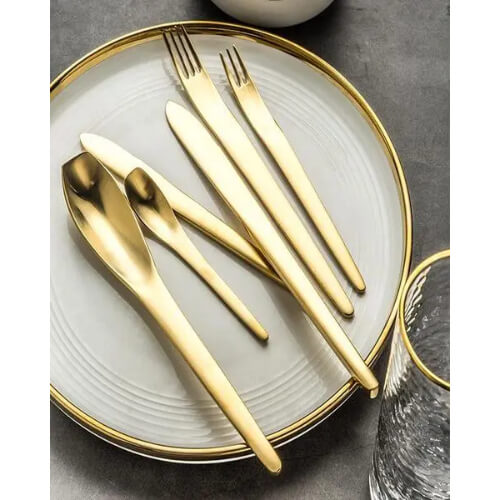
Atoosa Black and Golden Cutlery Set

Add a personal touch to your table setting with our collection of cutlery sets. This set is made of stainless steel and consists of a Dining Spoon, Fork, Knife. This sets is a perfect touch to a contemporary table setting and pair them with modern plates & bowls

Colour: Golden/Black
Material: Stainless Steel
Set Available in: 18 PCS (6 Spoons, 6 Forks, 6 Knives), 36 Pcs (12 Spoons, 12 Forks, 12 Knives)
Dimensions: DINNER KNIFE- 225*15mm , DINNER SPOON- 220*48mm, DINNER FORK- 225*27mm
Finishing Gold Finish
Package Details: 1 Pack
Style: Modern & Contemporary
Type: Cutlery Set
Washing Instructions: Rinse with warm water, mild soap and a soft sponge. Dry it off with a cloth or paper towel. It’s not dishwasher friendly.
Care: Do not keep with other cutlery, do not bang against other metal objects and keep each piece is their zip lock pouch.
Q. Is it possible to order just one piece of cutlery?

Q. How do I care for your cutlery?

Q. I have stains on my cutlery set what should I do?

Q. My knife’s blade has water spots on it. Is this going to affect its performance?

Q. What is Angie Homes cutlery made of?

Q. How do I care for my silver cutlery set?

Zara Golden Cutlery Set

Add a personal touch to your table setting with our collection of cutlery sets. This set is made of stainless steel and consists of a Dining Spoon, Fork, Knife. This sets is a perfect touch to a contemporary table setting and pair them with modern plates & bowls

Colour: Golden/Black
Material: Stainless Steel
Set Available in: 18 PCS (6 Spoons, 6 Forks, 6 Knives), 36 Pcs (12 Spoons, 12 Forks, 12 Knives)
Dimensions: DINNER KNIFE- 225*15mm , DINNER SPOON- 220*48mm, DINNER FORK- 225*27mm
Finishing Gold Finish
Package Details: 1 Pack
Style: Modern & Contemporary
Type: Cutlery Set
Washing Instructions: Rinse with warm water, mild soap and a soft sponge. Dry it off with a cloth or paper towel. It’s not dishwasher friendly.
Care: Do not keep with other cutlery, do not bang against other metal objects and keep each piece is their zip lock pouch.
Q. Is it possible to order just one piece of cutlery?

Q. How do I care for your cutlery?

Q. I have stains on my cutlery set what should I do?

Q. My knife’s blade has water spots on it. Is this going to affect its performance?

Q. What is Angie Homes cutlery made of?

Q. How do I care for my silver cutlery set?

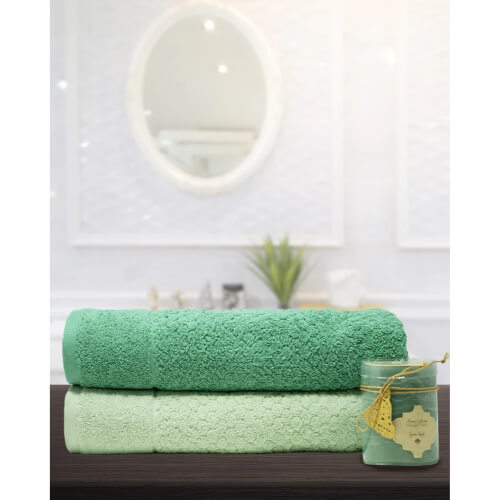
INDIGO BATH TOWELS- 2PCS- ANGIE’S INDIA

If you’re looking for a luxurious but cost-effective addition to your bathroom, these INDIGO BATH TOWELS- 2PCS are an ideal choice. Crafted with 100% cotton, these towels provide maximum absorbency, softness, and comfort. Plus, you can purchase these towels online at an affordable price – so you can enjoy the luxury at home without breaking the bank.

Washing Instruction:-
Machine Wash
Wash separately with like colors
Remove promptly after washing and put for drying
Tumble dry at low temperature
Do not bleach
Do not dry clean
Key Product Points:-
Set Contents: Set of 2 Bath Towel
Product Dimensions:-
Large: Bath Towel: 60 L x 120 W cm
Medium:- Hand Towel: 40 L x 60 W cm
Product Details:-
Material: Cotton
Wash Care: Machine Wash
Style / Model No: AKD-A-TW-20
Country of Origin: India
Color: Light Green + Dark Green
Ideal For: Gifting & Personal Use
Material: Cotton
Pattern: Tufted
Fabric Quality (GSM): 450
Bath Linen Type: Value pack

FAQs

Q: How often should I wash my towels?
A: It’s recommended to wash bath towels after 3-4 uses, or roughly once a week if you shower daily. Hand towels (which get frequent use) and face towels/washcloths should be washed even more often – ideally every 2-3 days, especially in a household with multiple people, to prevent bacteria buildup. Kitchen dish towels might need washing multiple times a week since they handle food and frequent drying. The American Cleaning Institute suggests washing towels after three or four normal uses. Always hang towels up to fully dry between uses – a towel that dries out thoroughly can be used a couple of times before washing. If a towel develops any Odor or feels damp, wash it sooner. And of course, always wash towels immediately if they’ve been used to clean up something like a spill or after contact with sweat (gym towels) to maintain hygiene.

Q: Should I wash new towels before using them?
A: Yes – it’s generally a good idea to wash new towels before first use. New towels often come with a bit of finishing residue or lint from the manufacturing process. A initial wash will remove excess dyes, chemicals, and lint. In fact, washing first can dramatically improve absorbency: during manufacturing, some towels get silicone or starch finishes to look plush on the shelf, but these finishes limit absorbency. Washing with a cup of white vinegar (instead of detergent) in the first wash can help strip off those finishes and set the color. Also, new towels can shed lint; a pre-wash (separately from other clothes) will get rid of a lot of that loose lint. So, for best performance and hygiene, toss your brand-new towels in a warm wash cycle before you start using them to dry off.

Q: Can I wash bath towels with other laundry (like clothes or sheets)?
A: It’s best to wash towels separately from clothes, for a couple of reasons. Towels are heavy and produce a lot of lint – mixing them with clothes can lead to lint sticking to your garments (especially terry towels on dark clothes) and can also prevent both from washing/rinsing optimally. Washing towels with sheets can also be problematic: large sheets can twist around towels, preventing proper cleaning. Towels also prefer a hotter wash for hygiene, which might not be suitable for all clothing. In a pinch, washing towels with sturdier items (like a load of sheets) on a hot cycle is okay, but avoid mixing towels with delicate fabrics. (In fact, our Angie Homes blog answered “Should You Wash Sheets and Towels Together?” – generally advising against it for the reasons above.) For the best results, wash towels in their own load with similar colors, using the appropriate water temperature (hot for white cotton towels, warm for colors) to get them truly clean and lint-free.

Q: Is it okay to use fabric softener or dryer sheets on towels?
A: It might surprise you, but no – you should avoid using liquid fabric softener or dryer sheets with towels. Fabric softeners coat fibers with a thin layer of chemicals (often silicone-based) that make fabrics feel silky. Unfortunately, this coating reduces towel absorbency by repelling water. Over time, softener buildup can also make towels feel stiff and less plush. If you love softness, instead try natural alternatives: add white vinegar to the rinse cycle occasionally (it helps remove detergent residue and keeps towels soft), or use wool dryer balls in the dryer to fluff towels and reduce static. Dryer sheets similarly leave a residue that diminishes absorbency, so skip them for towels. (For a full explanation, see our blog “Why Fabric Softener Is Bad for Towels” which details how softeners make towels less effective.) The good news is, a towel washed without softener will regain its natural fluffiness and absorbency – so you’ll dry off better and the towel will stay soft longer.

Q: How do I keep my towels soft and fluffy?
A: The secret to fluffy towels is proper washing and drying. First, avoid overloading the washing machine – give towels room to tumble and rinse thoroughly. Use a moderate amount of detergent (too much can leave residue that stiffens fibers ) and wash in warm water. Skip the fabric softener (as noted above) because it creates buildup; instead, you can periodically use vinegar in the rinse to strip residues. When drying, tumble dry on low heat and consider tossing in a few dryer balls – these help fluff the fabric by agitating and separating the towels as they dry. Dryer balls or even clean tennis balls will prevent towels from clumping, leading to more airflow and fluffiness. Remove towels promptly when they’re dry and give them a shake – this helps prevent them from compressing into a stiff state. Also, don’t iron towels (ironing flattens the loops and makes them less fluffy). By following these steps (wash warm, rinse with vinegar occasionally, dry with airflow), your towels should stay soft, fluffy, and inviting. (Angie Homes luxury towels are designed to be soft from the start; following these care tips keeps them that way.)

Q: How do I get the musty or sour smell out of my towels?
A: A musty, sour odor in towels is usually a sign of bacteria or mildew growth from towels not fully drying or from detergent buildup. To banish the smell, do a deep cleaning: wash the towels in hot water with either 1 cup of white vinegar (no detergent) or use baking soda (about 1/2 cup) in the wash. Vinegar helps kill mold/mildew and neutralize odors by removing residue. After a vinegar wash, wash again with detergent (no softener) to rinse out any remaining smell. Important: immediately take towels out of the washer and dry them thoroughly – either high heat in the dryer or line-dry in sunlight. The sun’s UV rays also help kill odor-causing microbes. Going forward, make sure you hang towels spread out to dry after each use (not balled up on a hook) to prevent that damp smell. A combination of proper washing (using vinegar occasionally) and ensuring towels are completely dry before folding will stop towels from smelling. If a particular towel’s odor persists after these tricks, it might be time to retire it – but usually a vinegar/baking soda treatment will rescue your towels and have them fresh again.

Q: Can I use bleach on my towels?
A: Use caution with bleach. Chlorine bleach will sanitize and whiten towels but can also weaken fibers over time. If you have white 100% cotton towels without special finishes, occasional bleaching is fine (follow the label instructions – some cotton towels are actually labeled “do not bleach” by the manufacturer to preserve integrity). For colored towels, avoid chlorine bleach as it will strip color and can cause yellowing. Instead, use oxygen bleach (color-safe bleach) or whitening powders which are gentler. A good practice for whitening dingy white towels is to use oxygen bleach or even baking soda + vinegar soaks, rather than chlorine, to protect the cotton. If you do use chlorine bleach, use it sparingly (e.g. every few washes, not every time) and dilute it properly before it contacts the towel to avoid spotting. Always wash rinsed towels thoroughly to remove any bleach residue. In summary: bleach can be effective for disinfecting or whitening, but it should be used infrequently and with care. Most of the time, hot water and a good detergent (and sun drying) will keep towels bright. If your white towels say “no bleach,” stick to alternatives to avoid damaging them.

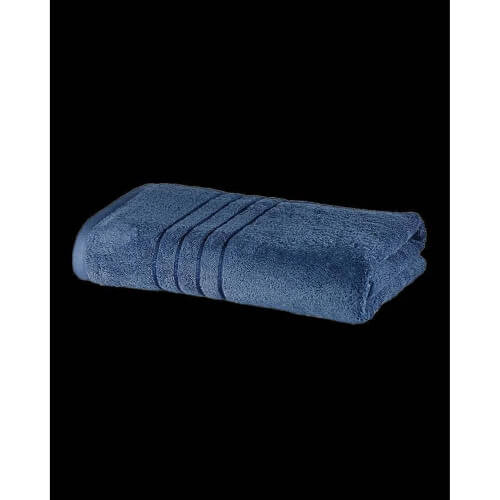
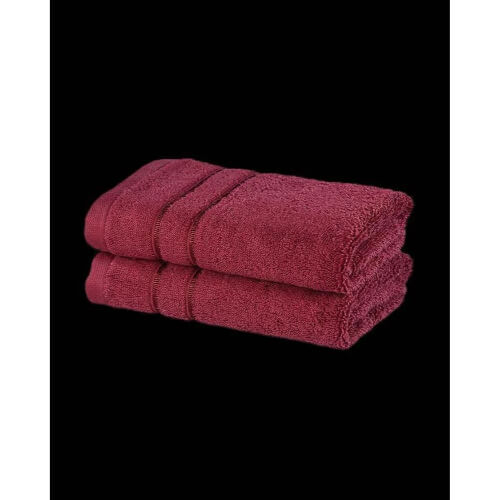
RUBY BATH TOWELS- 2PCS- ANGIE’S INDIA

Experience luxurious comfort with Rubi bath towels. Crafted of high-quality cotton, their soft, lightweight design is perfect for daily use. Enjoy a spa-like experience from the comfort of your home! With Angie’s India, you can easily purchase these towels online.

Washing Instruction:-
Machine Wash
Wash separately with like colors
Remove promptly after washing and put for drying
Tumble dry at low temperature
Do not bleach
Do not dry clean
Key Product Points:-
Set Contents: Set of 1 Bath Towel
Product Dimensions:-
Large: Bath Towel: 60 L x 120 W cm
Product Details:-
Material: Cotton
Wash Care: Machine Wash
Style / Model No: AKD-A-TW-40
Country of Origin: India
Color: Navy Blue
Ideal For: Gifting & Personal Use
Material: Cotton
Pattern: Tufted
Fabric Quality (GSM): 450
Bath Linen Type: Value pack
FAQs

Q: How often should I wash my towels?
A: It’s recommended to wash bath towels after 3-4 uses, or roughly once a week if you shower daily. Hand towels (which get frequent use) and face towels/washcloths should be washed even more often – ideally every 2-3 days, especially in a household with multiple people, to prevent bacteria buildup. Kitchen dish towels might need washing multiple times a week since they handle food and frequent drying. The American Cleaning Institute suggests washing towels after three or four normal uses. Always hang towels up to fully dry between uses – a towel that dries out thoroughly can be used a couple of times before washing. If a towel develops any Odor or feels damp, wash it sooner. And of course, always wash towels immediately if they’ve been used to clean up something like a spill or after contact with sweat (gym towels) to maintain hygiene.

Q: Should I wash new towels before using them?
A: Yes – it’s generally a good idea to wash new towels before first use. New towels often come with a bit of finishing residue or lint from the manufacturing process. A initial wash will remove excess dyes, chemicals, and lint. In fact, washing first can dramatically improve absorbency: during manufacturing, some towels get silicone or starch finishes to look plush on the shelf, but these finishes limit absorbency. Washing with a cup of white vinegar (instead of detergent) in the first wash can help strip off those finishes and set the color. Also, new towels can shed lint; a pre-wash (separately from other clothes) will get rid of a lot of that loose lint. So, for best performance and hygiene, toss your brand-new towels in a warm wash cycle before you start using them to dry off.

Q: Can I wash bath towels with other laundry (like clothes or sheets)?
A: It’s best to wash towels separately from clothes, for a couple of reasons. Towels are heavy and produce a lot of lint – mixing them with clothes can lead to lint sticking to your garments (especially terry towels on dark clothes) and can also prevent both from washing/rinsing optimally. Washing towels with sheets can also be problematic: large sheets can twist around towels, preventing proper cleaning. Towels also prefer a hotter wash for hygiene, which might not be suitable for all clothing. In a pinch, washing towels with sturdier items (like a load of sheets) on a hot cycle is okay, but avoid mixing towels with delicate fabrics. (In fact, our Angie Homes blog answered “Should You Wash Sheets and Towels Together?” – generally advising against it for the reasons above.) For the best results, wash towels in their own load with similar colors, using the appropriate water temperature (hot for white cotton towels, warm for colors) to get them truly clean and lint-free.

Q: Is it okay to use fabric softener or dryer sheets on towels?
A: It might surprise you, but no – you should avoid using liquid fabric softener or dryer sheets with towels. Fabric softeners coat fibers with a thin layer of chemicals (often silicone-based) that make fabrics feel silky. Unfortunately, this coating reduces towel absorbency by repelling water. Over time, softener buildup can also make towels feel stiff and less plush. If you love softness, instead try natural alternatives: add white vinegar to the rinse cycle occasionally (it helps remove detergent residue and keeps towels soft), or use wool dryer balls in the dryer to fluff towels and reduce static. Dryer sheets similarly leave a residue that diminishes absorbency, so skip them for towels. (For a full explanation, see our blog “Why Fabric Softener Is Bad for Towels” which details how softeners make towels less effective.) The good news is, a towel washed without softener will regain its natural fluffiness and absorbency – so you’ll dry off better and the towel will stay soft longer.

Q: How do I keep my towels soft and fluffy?
A: The secret to fluffy towels is proper washing and drying. First, avoid overloading the washing machine – give towels room to tumble and rinse thoroughly. Use a moderate amount of detergent (too much can leave residue that stiffens fibers ) and wash in warm water. Skip the fabric softener (as noted above) because it creates buildup; instead, you can periodically use vinegar in the rinse to strip residues. When drying, tumble dry on low heat and consider tossing in a few dryer balls – these help fluff the fabric by agitating and separating the towels as they dry. Dryer balls or even clean tennis balls will prevent towels from clumping, leading to more airflow and fluffiness. Remove towels promptly when they’re dry and give them a shake – this helps prevent them from compressing into a stiff state. Also, don’t iron towels (ironing flattens the loops and makes them less fluffy). By following these steps (wash warm, rinse with vinegar occasionally, dry with airflow), your towels should stay soft, fluffy, and inviting. (Angie Homes luxury towels are designed to be soft from the start; following these care tips keeps them that way.)

Q: How do I get the musty or sour smell out of my towels?
A: A musty, sour odor in towels is usually a sign of bacteria or mildew growth from towels not fully drying or from detergent buildup. To banish the smell, do a deep cleaning: wash the towels in hot water with either 1 cup of white vinegar (no detergent) or use baking soda (about 1/2 cup) in the wash. Vinegar helps kill mold/mildew and neutralize odors by removing residue. After a vinegar wash, wash again with detergent (no softener) to rinse out any remaining smell. Important: immediately take towels out of the washer and dry them thoroughly – either high heat in the dryer or line-dry in sunlight. The sun’s UV rays also help kill odor-causing microbes. Going forward, make sure you hang towels spread out to dry after each use (not balled up on a hook) to prevent that damp smell. A combination of proper washing (using vinegar occasionally) and ensuring towels are completely dry before folding will stop towels from smelling. If a particular towel’s odor persists after these tricks, it might be time to retire it – but usually a vinegar/baking soda treatment will rescue your towels and have them fresh again.

Q: Can I use bleach on my towels?
A: Use caution with bleach. Chlorine bleach will sanitize and whiten towels but can also weaken fibers over time. If you have white 100% cotton towels without special finishes, occasional bleaching is fine (follow the label instructions – some cotton towels are actually labeled “do not bleach” by the manufacturer to preserve integrity). For colored towels, avoid chlorine bleach as it will strip color and can cause yellowing. Instead, use oxygen bleach (color-safe bleach) or whitening powders which are gentler. A good practice for whitening dingy white towels is to use oxygen bleach or even baking soda + vinegar soaks, rather than chlorine, to protect the cotton. If you do use chlorine bleach, use it sparingly (e.g. every few washes, not every time) and dilute it properly before it contacts the towel to avoid spotting. Always wash rinsed towels thoroughly to remove any bleach residue. In summary: bleach can be effective for disinfecting or whitening, but it should be used infrequently and with care. Most of the time, hot water and a good detergent (and sun drying) will keep towels bright. If your white towels say “no bleach,” stick to alternatives to avoid damaging them.
TAYA BATH TOWELS- 2PCS- ANGIE’S INDIA

Enhance your bathing experience with the luxurious TAYA Bath Towels. These two-piece sets are made from 100% cotton for superior absorbency and comfort. Enjoy a luxurious, spa-like experience in the comfort of your home. Buy online now.

Washing Instruction:-
Machine Wash
Wash separately with like colors
Remove promptly after washing and put for drying
Tumble dry at low temperature
Do not bleach
Do not dry clean
Key Product Points:-
Set Contents: Set of 2 Bath Towel
Product Dimensions:-
Large: Bath Towel: 60 L x 120 W cm
Medium:- Hand Towel: 40 L x 60 W cm
Product Details:-
Material: Cotton
Wash Care: Machine Wash
Style / Model No: AKD-A-TW-42
Country of Origin: India
Color: Rosewood Pink Shade
Ideal For: Gifting & Personal Use
Material: Cotton
Pattern: Tufted
Fabric Quality (GSM): 450
Bath Linen Type: Value pack
FAQs

Q: How often should I wash my towels?
A: It’s recommended to wash bath towels after 3-4 uses, or roughly once a week if you shower daily. Hand towels (which get frequent use) and face towels/washcloths should be washed even more often – ideally every 2-3 days, especially in a household with multiple people, to prevent bacteria buildup. Kitchen dish towels might need washing multiple times a week since they handle food and frequent drying. The American Cleaning Institute suggests washing towels after three or four normal uses. Always hang towels up to fully dry between uses – a towel that dries out thoroughly can be used a couple of times before washing. If a towel develops any Odor or feels damp, wash it sooner. And of course, always wash towels immediately if they’ve been used to clean up something like a spill or after contact with sweat (gym towels) to maintain hygiene.

Q: Should I wash new towels before using them?
A: Yes – it’s generally a good idea to wash new towels before first use. New towels often come with a bit of finishing residue or lint from the manufacturing process. A initial wash will remove excess dyes, chemicals, and lint. In fact, washing first can dramatically improve absorbency: during manufacturing, some towels get silicone or starch finishes to look plush on the shelf, but these finishes limit absorbency. Washing with a cup of white vinegar (instead of detergent) in the first wash can help strip off those finishes and set the color. Also, new towels can shed lint; a pre-wash (separately from other clothes) will get rid of a lot of that loose lint. So, for best performance and hygiene, toss your brand-new towels in a warm wash cycle before you start using them to dry off.

Q: Can I wash bath towels with other laundry (like clothes or sheets)?
A: It’s best to wash towels separately from clothes, for a couple of reasons. Towels are heavy and produce a lot of lint – mixing them with clothes can lead to lint sticking to your garments (especially terry towels on dark clothes) and can also prevent both from washing/rinsing optimally. Washing towels with sheets can also be problematic: large sheets can twist around towels, preventing proper cleaning. Towels also prefer a hotter wash for hygiene, which might not be suitable for all clothing. In a pinch, washing towels with sturdier items (like a load of sheets) on a hot cycle is okay, but avoid mixing towels with delicate fabrics. (In fact, our Angie Homes blog answered “Should You Wash Sheets and Towels Together?” – generally advising against it for the reasons above.) For the best results, wash towels in their own load with similar colors, using the appropriate water temperature (hot for white cotton towels, warm for colors) to get them truly clean and lint-free.

Q: Is it okay to use fabric softener or dryer sheets on towels?
A: It might surprise you, but no – you should avoid using liquid fabric softener or dryer sheets with towels. Fabric softeners coat fibers with a thin layer of chemicals (often silicone-based) that make fabrics feel silky. Unfortunately, this coating reduces towel absorbency by repelling water. Over time, softener buildup can also make towels feel stiff and less plush. If you love softness, instead try natural alternatives: add white vinegar to the rinse cycle occasionally (it helps remove detergent residue and keeps towels soft), or use wool dryer balls in the dryer to fluff towels and reduce static. Dryer sheets similarly leave a residue that diminishes absorbency, so skip them for towels. (For a full explanation, see our blog “Why Fabric Softener Is Bad for Towels” which details how softeners make towels less effective.) The good news is, a towel washed without softener will regain its natural fluffiness and absorbency – so you’ll dry off better and the towel will stay soft longer.

Q: How do I keep my towels soft and fluffy?
A: The secret to fluffy towels is proper washing and drying. First, avoid overloading the washing machine – give towels room to tumble and rinse thoroughly. Use a moderate amount of detergent (too much can leave residue that stiffens fibers ) and wash in warm water. Skip the fabric softener (as noted above) because it creates buildup; instead, you can periodically use vinegar in the rinse to strip residues. When drying, tumble dry on low heat and consider tossing in a few dryer balls – these help fluff the fabric by agitating and separating the towels as they dry. Dryer balls or even clean tennis balls will prevent towels from clumping, leading to more airflow and fluffiness. Remove towels promptly when they’re dry and give them a shake – this helps prevent them from compressing into a stiff state. Also, don’t iron towels (ironing flattens the loops and makes them less fluffy). By following these steps (wash warm, rinse with vinegar occasionally, dry with airflow), your towels should stay soft, fluffy, and inviting. (Angie Homes luxury towels are designed to be soft from the start; following these care tips keeps them that way.)

Q: How do I get the musty or sour smell out of my towels?
A: A musty, sour odor in towels is usually a sign of bacteria or mildew growth from towels not fully drying or from detergent buildup. To banish the smell, do a deep cleaning: wash the towels in hot water with either 1 cup of white vinegar (no detergent) or use baking soda (about 1/2 cup) in the wash. Vinegar helps kill mold/mildew and neutralize odors by removing residue. After a vinegar wash, wash again with detergent (no softener) to rinse out any remaining smell. Important: immediately take towels out of the washer and dry them thoroughly – either high heat in the dryer or line-dry in sunlight. The sun’s UV rays also help kill odor-causing microbes. Going forward, make sure you hang towels spread out to dry after each use (not balled up on a hook) to prevent that damp smell. A combination of proper washing (using vinegar occasionally) and ensuring towels are completely dry before folding will stop towels from smelling. If a particular towel’s odor persists after these tricks, it might be time to retire it – but usually a vinegar/baking soda treatment will rescue your towels and have them fresh again.

Q: Can I use bleach on my towels?
A: Use caution with bleach. Chlorine bleach will sanitize and whiten towels but can also weaken fibers over time. If you have white 100% cotton towels without special finishes, occasional bleaching is fine (follow the label instructions – some cotton towels are actually labeled “do not bleach” by the manufacturer to preserve integrity). For colored towels, avoid chlorine bleach as it will strip color and can cause yellowing. Instead, use oxygen bleach (color-safe bleach) or whitening powders which are gentler. A good practice for whitening dingy white towels is to use oxygen bleach or even baking soda + vinegar soaks, rather than chlorine, to protect the cotton. If you do use chlorine bleach, use it sparingly (e.g. every few washes, not every time) and dilute it properly before it contacts the towel to avoid spotting. Always wash rinsed towels thoroughly to remove any bleach residue. In summary: bleach can be effective for disinfecting or whitening, but it should be used infrequently and with care. Most of the time, hot water and a good detergent (and sun drying) will keep towels bright. If your white towels say “no bleach,” stick to alternatives to avoid damaging them.
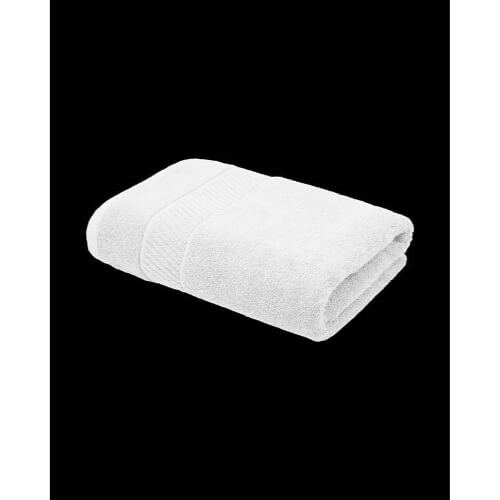
Beatrix Bath Towels-1 Pcs

The Beatrix Bath Towel is made from sumptuous 100% cotton that is perfect for drying off in luxury. Soft and absorbent, this bath towel is ideal for a spa-like experience in the comfort of your own home. Get the superior quality of luxury towels, now online and delivered directly to your door.

Washing Instruction:-
Machine Wash
Wash separately with like colors
Remove promptly after washing and put for drying
Tumble dry at low temperature
Do not bleach
Do not dry clean
Key Product Points:-
Set Contents: Set of 1 Bath Towel
Product Dimensions:-
Large: Bath Towel: 60 L x 120 W cm
Product Details:-
Material: Cotton
Wash Care: Machine Wash
Style / Model No: AKD-A-TW-05
Country of Origin: India
Color: White
Ideal For: Gifting & Personal Use
Material: Cotton
Pattern: Tufted
Fabric Quality (GSM): 450
Bath Linen Type: Value pack
FAQs

Q: How often should I wash my towels?
A: It’s recommended to wash bath towels after 3-4 uses, or roughly once a week if you shower daily. Hand towels (which get frequent use) and face towels/washcloths should be washed even more often – ideally every 2-3 days, especially in a household with multiple people, to prevent bacteria buildup. Kitchen dish towels might need washing multiple times a week since they handle food and frequent drying. The American Cleaning Institute suggests washing towels after three or four normal uses. Always hang towels up to fully dry between uses – a towel that dries out thoroughly can be used a couple of times before washing. If a towel develops any Odor or feels damp, wash it sooner. And of course, always wash towels immediately if they’ve been used to clean up something like a spill or after contact with sweat (gym towels) to maintain hygiene.

Q: Should I wash new towels before using them?
A: Yes – it’s generally a good idea to wash new towels before first use. New towels often come with a bit of finishing residue or lint from the manufacturing process. A initial wash will remove excess dyes, chemicals, and lint. In fact, washing first can dramatically improve absorbency: during manufacturing, some towels get silicone or starch finishes to look plush on the shelf, but these finishes limit absorbency. Washing with a cup of white vinegar (instead of detergent) in the first wash can help strip off those finishes and set the color. Also, new towels can shed lint; a pre-wash (separately from other clothes) will get rid of a lot of that loose lint. So, for best performance and hygiene, toss your brand-new towels in a warm wash cycle before you start using them to dry off.

Q: Can I wash bath towels with other laundry (like clothes or sheets)?
A: It’s best to wash towels separately from clothes, for a couple of reasons. Towels are heavy and produce a lot of lint – mixing them with clothes can lead to lint sticking to your garments (especially terry towels on dark clothes) and can also prevent both from washing/rinsing optimally. Washing towels with sheets can also be problematic: large sheets can twist around towels, preventing proper cleaning. Towels also prefer a hotter wash for hygiene, which might not be suitable for all clothing. In a pinch, washing towels with sturdier items (like a load of sheets) on a hot cycle is okay, but avoid mixing towels with delicate fabrics. (In fact, our Angie Homes blog answered “Should You Wash Sheets and Towels Together?” – generally advising against it for the reasons above.) For the best results, wash towels in their own load with similar colors, using the appropriate water temperature (hot for white cotton towels, warm for colors) to get them truly clean and lint-free.

Q: Is it okay to use fabric softener or dryer sheets on towels?
A: It might surprise you, but no – you should avoid using liquid fabric softener or dryer sheets with towels. Fabric softeners coat fibers with a thin layer of chemicals (often silicone-based) that make fabrics feel silky. Unfortunately, this coating reduces towel absorbency by repelling water. Over time, softener buildup can also make towels feel stiff and less plush. If you love softness, instead try natural alternatives: add white vinegar to the rinse cycle occasionally (it helps remove detergent residue and keeps towels soft), or use wool dryer balls in the dryer to fluff towels and reduce static. Dryer sheets similarly leave a residue that diminishes absorbency, so skip them for towels. (For a full explanation, see our blog “Why Fabric Softener Is Bad for Towels” which details how softeners make towels less effective.) The good news is, a towel washed without softener will regain its natural fluffiness and absorbency – so you’ll dry off better and the towel will stay soft longer.

Q: How do I keep my towels soft and fluffy?
A: The secret to fluffy towels is proper washing and drying. First, avoid overloading the washing machine – give towels room to tumble and rinse thoroughly. Use a moderate amount of detergent (too much can leave residue that stiffens fibers ) and wash in warm water. Skip the fabric softener (as noted above) because it creates buildup; instead, you can periodically use vinegar in the rinse to strip residues. When drying, tumble dry on low heat and consider tossing in a few dryer balls – these help fluff the fabric by agitating and separating the towels as they dry. Dryer balls or even clean tennis balls will prevent towels from clumping, leading to more airflow and fluffiness. Remove towels promptly when they’re dry and give them a shake – this helps prevent them from compressing into a stiff state. Also, don’t iron towels (ironing flattens the loops and makes them less fluffy). By following these steps (wash warm, rinse with vinegar occasionally, dry with airflow), your towels should stay soft, fluffy, and inviting. (Angie Homes luxury towels are designed to be soft from the start; following these care tips keeps them that way.)

Q: How do I get the musty or sour smell out of my towels?
A: A musty, sour odor in towels is usually a sign of bacteria or mildew growth from towels not fully drying or from detergent buildup. To banish the smell, do a deep cleaning: wash the towels in hot water with either 1 cup of white vinegar (no detergent) or use baking soda (about 1/2 cup) in the wash. Vinegar helps kill mold/mildew and neutralize odors by removing residue. After a vinegar wash, wash again with detergent (no softener) to rinse out any remaining smell. Important: immediately take towels out of the washer and dry them thoroughly – either high heat in the dryer or line-dry in sunlight. The sun’s UV rays also help kill odor-causing microbes. Going forward, make sure you hang towels spread out to dry after each use (not balled up on a hook) to prevent that damp smell. A combination of proper washing (using vinegar occasionally) and ensuring towels are completely dry before folding will stop towels from smelling. If a particular towel’s odor persists after these tricks, it might be time to retire it – but usually a vinegar/baking soda treatment will rescue your towels and have them fresh again.

Q: Can I use bleach on my towels?
A: Use caution with bleach. Chlorine bleach will sanitize and whiten towels but can also weaken fibers over time. If you have white 100% cotton towels without special finishes, occasional bleaching is fine (follow the label instructions – some cotton towels are actually labeled “do not bleach” by the manufacturer to preserve integrity). For colored towels, avoid chlorine bleach as it will strip color and can cause yellowing. Instead, use oxygen bleach (color-safe bleach) or whitening powders which are gentler. A good practice for whitening dingy white towels is to use oxygen bleach or even baking soda + vinegar soaks, rather than chlorine, to protect the cotton. If you do use chlorine bleach, use it sparingly (e.g. every few washes, not every time) and dilute it properly before it contacts the towel to avoid spotting. Always wash rinsed towels thoroughly to remove any bleach residue. In summary: bleach can be effective for disinfecting or whitening, but it should be used infrequently and with care. Most of the time, hot water and a good detergent (and sun drying) will keep towels bright. If your white towels say “no bleach,” stick to alternatives to avoid damaging them.
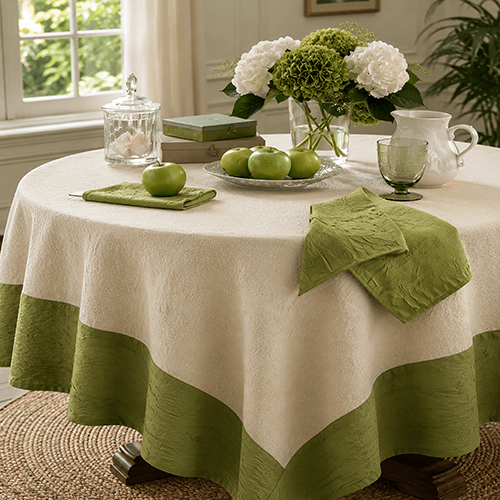
Simple Sheen Stylish Table Cloth – Angie India Table Cloth

PRODUCT DETAILS
Product Design

Print/Pattern: Printed
Color: Green and white
Type: Table
Fabric: 100%Cotton
Features:

Set Content: Table Covers
Seater: 4 Seater
Material & Care
100% Cotton
Hand-wash or machine wash
Low heat tumble dry
iron as needed
Don not bleach
Dry cleanable
Size & Fit
Dimensions: 1.77 m x 2.28 m (Length x Width)

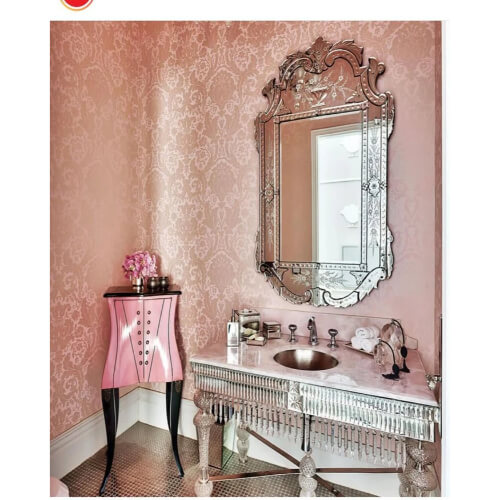
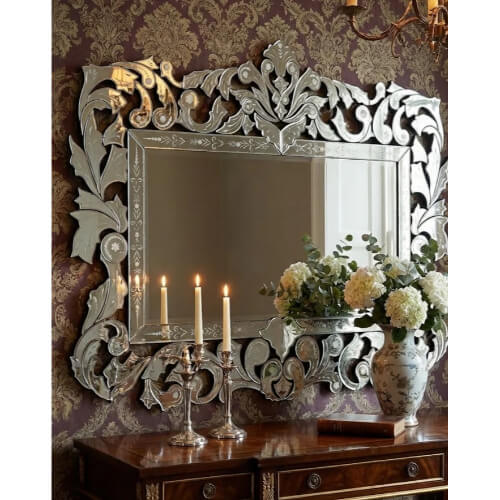
Chia Silver Leaf Venetian Mirror – Angie’s India Mirrors

This elegant CHIA SILVER LEAF VENETIAN MIRROR, finished with silver leaf and sourced from the Venetian mirror tradition, adds a timeless, transitional style to any room. With its eye-catching design, it is perfect for bringing light and beauty into any interior space.

Material: Beveled Mirror, Board on Back Side
Frame Material: Antique Cut Mirror
Frame Thickness: 3 Inches
Size Available: 3 x 4 Feet(L*W), 5 x 4 Feet(L*W)
Mirror Type: Wall Mirror
Package weight: 25 Kgs
Style: Classic
Pack Content: 1 Pc
Assembly: No Assembly Required
Type: Mirror
Care Instruction: Clean with a soft damp cloth, do not wash with water.

FAQs
1. What types of mirrors Does Angie homes offer?
We specialize in wall mirrors, bathroom mirrors with lights, frameless mirrors, round, oval, rectangular, and square mirrors, Venetian mirrors, wood-framed mirrors, crystal mirrors, metal mirrors, floor-standing mirrors, and mirrored furniture including console tables and coffee tables.

2. What are the benefits of LED bathroom mirrors?
LED mirrors provide enhanced visibility with energy-efficient lighting, 3-color temperature settings (warm, natural, cool white), dimmable brightness, defog function, touch controls, and memory settings for your convenience.

3. Are your LED mirrors waterproof?
Yes! All our LED mirrors feature IP54-rated waterproof and moisture-proof backing, making them safe for bathroom use.

4. What is the defog button feature in LED mirrors?
The defog button activates a built-in heating element that prevents your mirror from fogging up after hot showers, keeping the surface clear instantly.

5. Can I adjust the color temperature and brightness of LED mirrors?
Yes! Choose from 3 color temperatures (warm, natural, cool white) and adjust brightness from 5% to 100%. The memory function automatically saves your last setting.

6. What shapes and sizes are available for bathroom mirrors?
We offer round, oval, rectangular, square, capsule, arch, and irregular designs in various sizes ranging from compact options to large statement pieces. Custom sizes are also available.

7. Are your mirrors suitable for small bathrooms?
Absolutely! We have space-saving designs with integrated shelves or cabinets, and frameless mirrors that create an illusion of more space.

8. What materials are used in Angie Homes mirrors?
Our mirrors use 5mm tempered glass (5 times stronger than ordinary glass) with frames in premium wood, metal (black, gold, brass), or crystal finishes.

Luxury Venetian Mirror – Angie India Mirror

Material: Beveled Mirror, Board on Back Side
Frame Material: Antique Cut Mirror
Frame Thickness: 3 Inches
Size Available: 3 x 4 Feet(L*W), 5 x 4 Feet(L*W)
Mirror Type: Wall Mirror
Package weight: 25 Kgs
Style: Classic
Pack Content: 1 Pc
Assembly: No Assembly Required
Type: Mirror
Care Instruction: Clean with a soft damp cloth, do not wash with water.

FAQs
1. What types of mirrors Does Angie homes offer?
We specialize in wall mirrors, bathroom mirrors with lights, frameless mirrors, round, oval, rectangular, and square mirrors, Venetian mirrors, wood-framed mirrors, crystal mirrors, metal mirrors, floor-standing mirrors, and mirrored furniture including console tables and coffee tables.

2. What are the benefits of LED bathroom mirrors?
LED mirrors provide enhanced visibility with energy-efficient lighting, 3-color temperature settings (warm, natural, cool white), dimmable brightness, defog function, touch controls, and memory settings for your convenience.

3. Are your LED mirrors waterproof?
Yes! All our LED mirrors feature IP54-rated waterproof and moisture-proof backing, making them safe for bathroom use.

4. What is the defog button feature in LED mirrors?
The defog button activates a built-in heating element that prevents your mirror from fogging up after hot showers, keeping the surface clear instantly.

5. Can I adjust the color temperature and brightness of LED mirrors?
Yes! Choose from 3 color temperatures (warm, natural, cool white) and adjust brightness from 5% to 100%. The memory function automatically saves your last setting.

6. What shapes and sizes are available for bathroom mirrors?
We offer round, oval, rectangular, square, capsule, arch, and irregular designs in various sizes ranging from compact options to large statement pieces. Custom sizes are also available.

7. Are your mirrors suitable for small bathrooms?
Absolutely! We have space-saving designs with integrated shelves or cabinets, and frameless mirrors that create an illusion of more space.

8. What materials are used in Angie Homes mirrors?
Our mirrors use 5mm tempered glass (5 times stronger than ordinary glass) with frames in premium wood, metal (black, gold, brass), or crystal finishes.

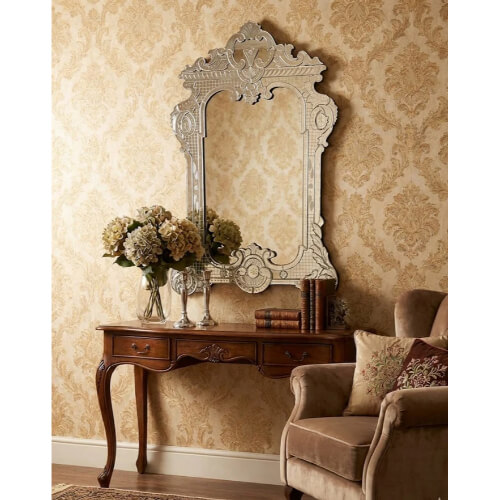
Hone Venetian Wall Mirror – Angie’s India Mirrors

A beautiful piece crafted with skilful glass-working techniques, Venetian mirror is used to decorate any room. Its unique style adds the brilliant sparkle that adorns the walls of living room, bedroom, lobbies, halls and other corner of the room

Material: Beveled Mirror, Board on Back Side
Frame Material: Antique Cut Mirror
Frame Thickness: 3 Inches
Size Available: 3 x 4 Feet(L*W), 5 x 4 Feet(L*W)
Mirror Type: Wall Mirror
Package weight: 25 Kgs
Style: Classic
Pack Content: 1 Pc
Assembly: No Assembly Required
Type: Mirror
Care Instruction: Clean with a soft damp cloth, do not wash with water.

FAQs
1. What types of mirrors Does Angie homes offer?
We specialize in wall mirrors, bathroom mirrors with lights, frameless mirrors, round, oval, rectangular, and square mirrors, Venetian mirrors, wood-framed mirrors, crystal mirrors, metal mirrors, floor-standing mirrors, and mirrored furniture including console tables and coffee tables.

2. What are the benefits of LED bathroom mirrors?
LED mirrors provide enhanced visibility with energy-efficient lighting, 3-color temperature settings (warm, natural, cool white), dimmable brightness, defog function, touch controls, and memory settings for your convenience.

3. Are your LED mirrors waterproof?
Yes! All our LED mirrors feature IP54-rated waterproof and moisture-proof backing, making them safe for bathroom use.

4. What is the defog button feature in LED mirrors?
The defog button activates a built-in heating element that prevents your mirror from fogging up after hot showers, keeping the surface clear instantly.

5. Can I adjust the color temperature and brightness of LED mirrors?
Yes! Choose from 3 color temperatures (warm, natural, cool white) and adjust brightness from 5% to 100%. The memory function automatically saves your last setting.

6. What shapes and sizes are available for bathroom mirrors?
We offer round, oval, rectangular, square, capsule, arch, and irregular designs in various sizes ranging from compact options to large statement pieces. Custom sizes are also available.

7. Are your mirrors suitable for small bathrooms?
Absolutely! We have space-saving designs with integrated shelves or cabinets, and frameless mirrors that create an illusion of more space.

8. What materials are used in Angie Homes mirrors?
Our mirrors use 5mm tempered glass (5 times stronger than ordinary glass) with frames in premium wood, metal (black, gold, brass), or crystal finishes.